Retro Angela Duo: A Maker’s Best Friend for Charming Typography
Designing with Retro Angela Duo Feels Like a Creative Boost
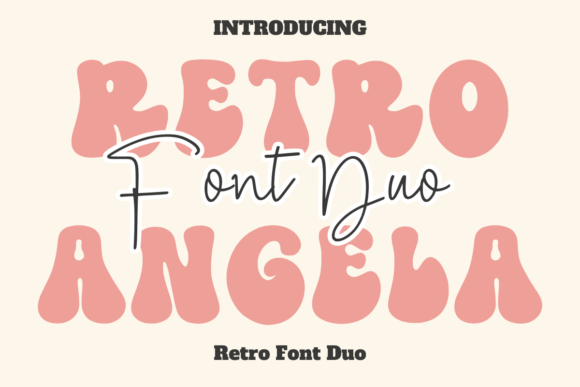
I was halfway through designing a set of candle labels for my spring collection when I decided to try Retro Angela Duo. The font has that groovy, signature-style charm that instantly gave my labels a handcrafted, vintage-inspired look. It wasn’t just about readability—it was about personality. Retro Angela Duo isn’t just a font; it’s a design companion that adds warmth and whimsy to every project it touches.
What Makes Retro Angela Duo Stand Out?
This display font combines monoline elegance with retro flair, making it perfect for short phrases, names, and titles. It’s not meant for long paragraphs, but rather for decorative use—think greeting cards, tote bags, mugs, or boutique tags. The font has a soft, flowing structure that feels both modern and nostalgic, ideal for makers who want to evoke a sense of warmth and authenticity in their products.
From Labels to Invitations: Real-World Uses for Retro Angela Duo
I’ve used Retro Angela Duo across several product lines—from boutique packaging to seasonal greeting cards. One of my favorite applications was for a set of wedding welcome signs. The font’s elegant yet playful structure made the signage feel personal and inviting. I also tested it on planner pages and digital printables, where it added a touch of softness without sacrificing clarity.
For candle labels, the font worked beautifully in small sizes, maintaining legibility while still delivering that vintage charm. On tote bags and mugs, the monoline style translated well into print, keeping the design clean and consistent. Whether I was crafting holiday tags or boutique product labels, Retro Angela Duo always gave my work a unique, hand-drawn feel.
How Typography Influences Branding and Customer Appeal
Typography plays a subtle but powerful role in brand identity. Retro Angela Duo helped me create a cohesive visual language across my product line. Customers began recognizing my packaging and digital downloads by the font alone, which boosted brand recall. The font’s emotional appeal—its ability to feel both fun and elegant—also helped me connect with audiences who appreciated handmade, artisanal design.
Pairing Retro Angela Duo with Other Fonts
One of the joys of working with Retro Angela Duo is how well it pairs with other typefaces. For contrast, I often combine it with a clean sans serif like Montserrat or a simple serif like Merriweather. When designing wedding invitations, I paired it with a script font for the names and used Retro Angela Duo for the event details. This created a balanced, visually appealing layout that felt both modern and timeless.
For digital templates and planner pages, I used Retro Angela Duo as the main heading font and paired it with a more neutral sans serif for body text. This made the documents feel organized yet warm—perfect for creative professionals and hobbyists who want to add personality without sacrificing readability.
Practical Design Tips for Using Retro Angela Duo
When working with cutting machines like Cricut or Silhouette, I found that Retro Angela Duo scaled beautifully, even at small sizes. However, for very tiny stickers or labels, I adjusted the spacing slightly to ensure clarity. The font’s monoline structure means it doesn’t have thick and thin strokes, which can sometimes cause issues in laser cutting or vinyl applications.
For printed cards and packaging, I always previewed the font in different sizes to make sure it maintained its charm across formats. I also made sure to test the font in both black and white and color mockups to see how it interacted with other design elements. In listing images and shop banners, using Retro Angela Duo for titles and key text helped draw attention and guide the viewer’s eye naturally.
What to Check Before Using Retro Angela Duo Commercially
Before using Retro Angela Duo in commercial products, I recommend checking the font’s licensing terms. Most premium fonts like this one allow for use in physical products, digital downloads, and SVG designs, but it’s always good to confirm. Also, be sure to review the included styles—ligatures, alternates, and swashes can add extra flair to your designs.
The font typically comes in multiple file formats, including OTF and TTF, making it compatible with most design software. If you’re creating multilingual printables or packaging, check for language support to ensure the font covers the characters you need. Finally, if you’re offering digital templates or SVG cut files, mention the font name in your product description so buyers can replicate the design accurately.